Prototypes for 4WD and camper accessory brands
Developing your first interior organiser, enclosure or camper fit-out part? Hand Neutrino the design, the prototype and a small first batch. Designers and makers from the network build it, and I project-manage the job, as long as the part isn’t structural or covered by an Australian Design Rule. You get a rough price range within 24 hours, then a conversation with me about the real price.

Who it’s for
- Accessory start-upsA first product to design, prototype and test before you commit to tooling.
- Camper buildersThe fit-out parts you can’t buy: covers, trims, organisers and enclosures.
- Established brandsA new idea to prototype before it goes to your manufacturer.
What you can hand over
- PrototypesLooks-like and works-like versions to test in the vehicle.
- Interior organisersTrays, dividers and holders for the cabin and the back.
- EnclosuresCases for electronics and controls, designed around the parts.
- Trim and coversPanels, covers and finishing pieces.
- Mounts for non-safety itemsHolders for phones, radios, torches and tools.
- A small first batchEnough units to test with customers before tooling.
What to send with the brief
A sentence and a photo are enough to start. These help the designer get it right first time.
| Job | Send | Keep in mind |
|---|---|---|
| Interior organiser | The vehicle, the space and what it holds | Say how it’s held in place |
| Enclosure | The parts that go inside, and where it mounts | Say what heat, dust and vibration it will see |
| Mount | What it holds and where it goes | Only for items that don’t affect safety |
What I don’t take on
Many 4WD products carry load or are covered by an Australian Design Rule, and in Victoria changing an ADR-covered part, or anything that affects a vehicle’s structure, safety systems or handling, generally needs a VASS approval. So these stay out:
- Bull bars
- Roof-rack load parts
- Towbars
- Anything near the brakes or steering
The offer in four lines
- You get
- A rough price range within 24 hours and a conversation with me about the real price, then a designer and a maker to build it, with the job project-managed for you.
- It costs
- Nothing until you accept a price. Every build is priced on its own, Neutrino’s fee is included, and the price only changes if you change the job.
- You risk
- Nothing. Walk away any time before you accept.
- To start
- Post your idea: a sentence and a photo or sketch. No drawings needed.
How a job runs
Imagine
You post your idea: a sentence and a photo or sketch. I send you a rough price range, then talk the real price through with you. Then I write the brief with the most it can cost, and designers and makers bid.
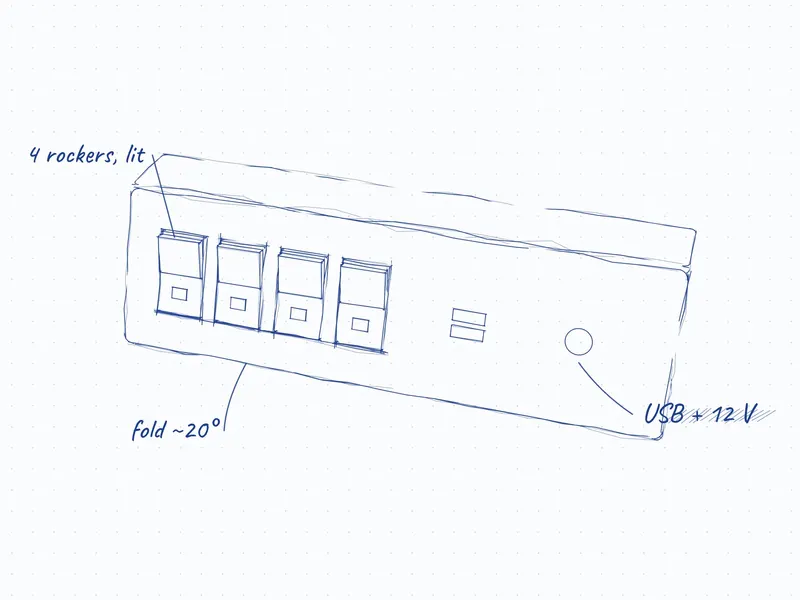
Render of an example part, modelled for this site, not a customer job
Draw
A designer models it and draws it up. I check the design, then you approve it before anything is made.
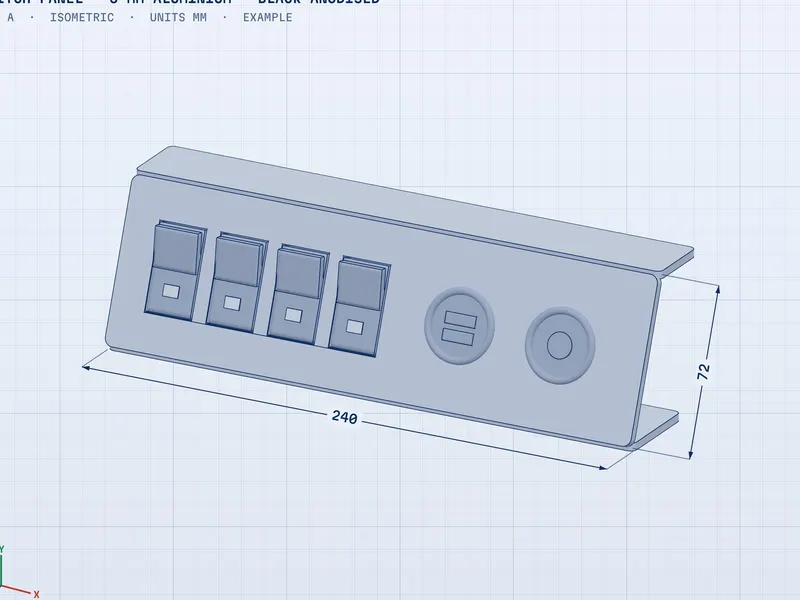
Render of an example part, modelled for this site, not a customer job
Make
A maker builds it to the approved design: machined, fabricated, printed, wired or coded.
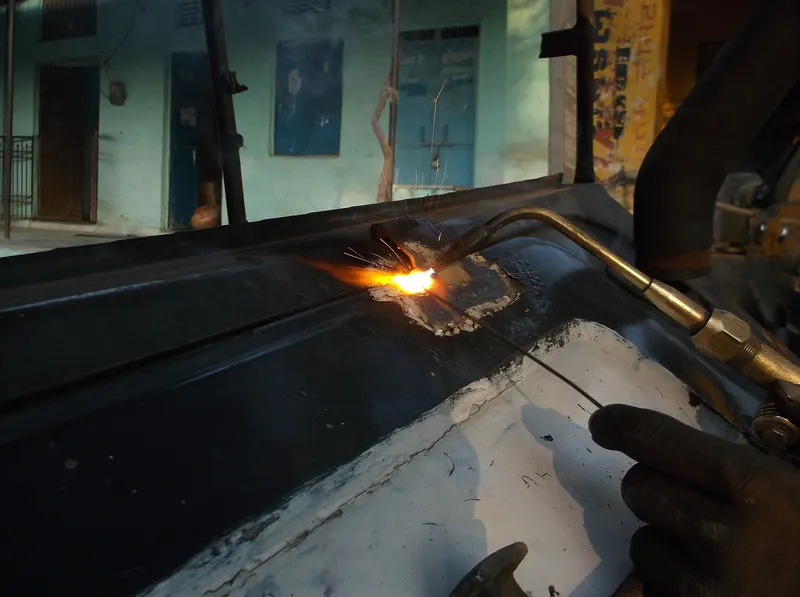
Photo: Welder at work, Chetan Menaria, CC0
Deliver
I check the build before it reaches you. You confirm you’ve got it, then sign off that it works as you wanted, and that’s when the maker is paid.

Photo: Ships out today, Bench Accounting, CC0


Four promises
Fixed price once accepted
The price you accept is the price, with Neutrino’s fee included. Design revisions follow your plan: 5 on Basic, 25 on Premium, unlimited on Platinum. If you change the job itself, the change is priced before any work is done, and you can say no.
Checked, then approved by you
I check every design, then you approve it before anything is cut, printed or welded.
Made to the approved design
I check every build before it reaches you. If it still doesn’t match the approved design, raise it before you sign off and the maker fixes or remakes it at no cost to you.
The maker is paid when you sign off
You pay Neutrino, not a stranger. The maker is paid once you sign off that it works as you wanted.
Why hand it to me
I trained in robotics and mechatronics engineering, and spent about five years as a mechatronics engineer at a hot water systems startup, so I know how a product goes from a first prototype to something you can sell.
On a Neutrino job I check every design before a maker starts, and every build before it goes to you.
Rather not sign up? Tell me here
Two minutes, no account. I read every idea and reply myself by email with a rough price range within 24 hours, then a conversation with me about the real price.
Questions
Can you prototype a drawer system?
Parts of one, such as the organisers and trays that sit inside. The frame and how it’s fixed to the vehicle carry load, so they stay with an engineer.
What happens after the prototype?
A small first batch can follow, to test with customers. Larger production runs usually move to a manufacturer with tooling.
Will it handle corrugations and heat?
Tell me where it goes and how it’s used. The brief sets out the material and the process, and the makers who bid price to it. Testing it in the vehicle before you sell it is yours to do.
Can you make bull bar or roof-rack parts?
No. Bull bars, roof-rack load parts, towbars and anything near the brakes or steering are out. They carry load or are covered by Australian Design Rules, and in Victoria modifying them generally needs a VASS approval.
Do product safety rules apply when I sell it?
Once a product is on sale, the rules for consumer goods apply, and the ACCC’s mandatory standards cover some vehicle accessories. Check what applies to yours before you sell it.
Do I need drawings?
No. A description, a sketch or a photo is enough to start. Turning it into drawings is part of the work.
Who owns the design?
You do, once it’s paid for.
What if it isn’t right?
Put it right: tell me before you sign off, on your project, with photos; your money stays held. The maker replies within 2 business days with a fix or a remake at no cost. If you don't agree, Neutrino decides within 5 business days of your request: fixed or remade free, or that stage refunded.
Not a vehicle accessory?
Neutrino builds any defined physical product: products, parts and fixes for people and businesses.
Also: Prototypes for inventors and product founders · Reproduction trim and parts for classic car and motorcycle restorers