
Your product idea needs a build, not a workshop
I help founders turn product ideas into custom parts you can hold — and the systems around them — one engineer, fixed scope.
Problems I see in this industry
- The idea is clear but nothing physical exists yet
- You've been quoted fabrication without a design manufacturers can use
- Digital and physical work are split across vendors who don't talk
Industry context
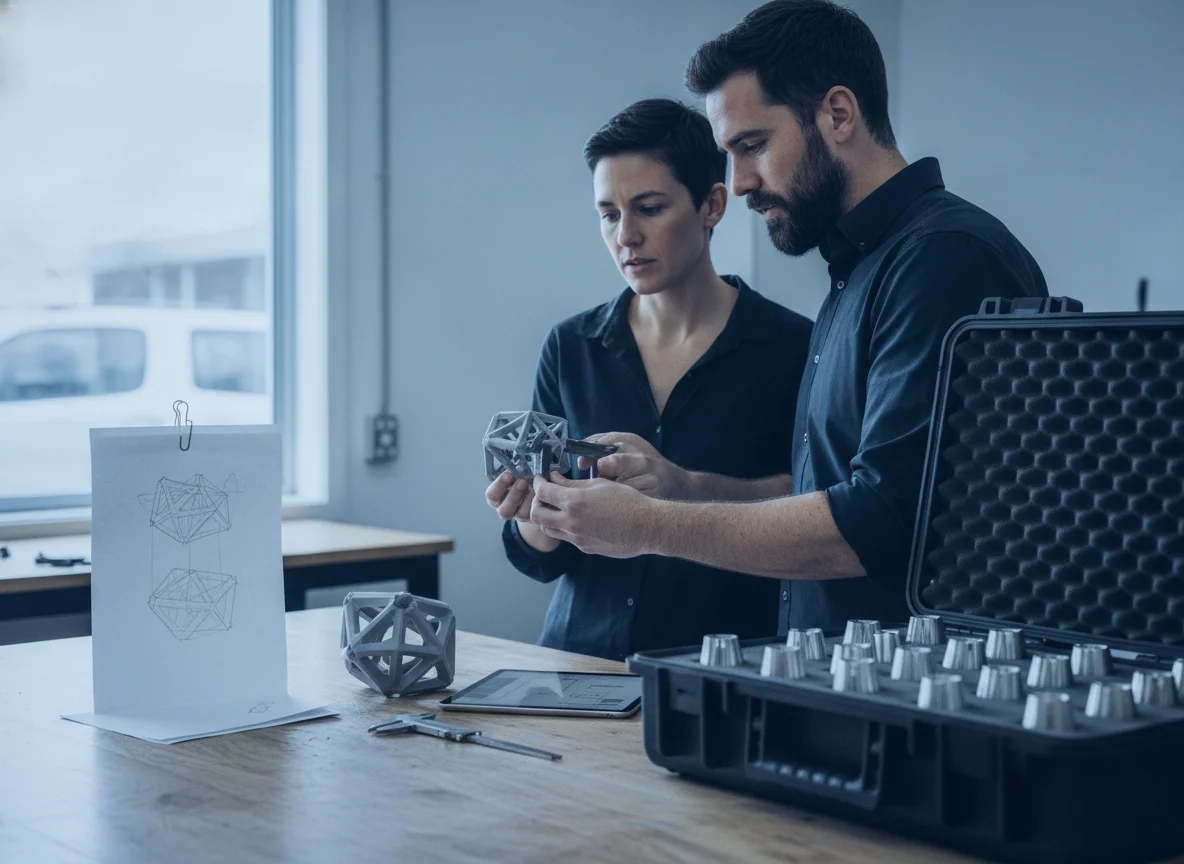
Hardware ideas die in the gap between sketch and something you can test — book a free call, and I'll take it from there on the same path I use for every job.
Product ideas moving from concept to a custom part you can hold.
Who this is for
This is for founders and established businesses with a product idea that has not become an object. There may be sketches, a supplier who wants files you do not have, and quotes that assume a level of design maturity you have not reached. The common thread is that digital and physical work keep getting split across vendors who do not talk to each other.
A first build, end to end
A first path often looks like this: there are sketches, a supplier asking for files that do not exist, and quotes that assume a level of design maturity the idea has not reached yet.
- Run a readiness conversation first — including whether the idea has been tested on anyone who would pay for it.
- Produce CAD good enough to fabricate from, rather than good enough to present.
- Build one physical unit you can put in front of a customer or a manufacturer.
- Where the product needs software, scope it with the same team instead of handing it to a second vendor.
Outcome: You end up with something real to show, files a manufacturer can quote against, and no gap between the people who designed the object and the people who built its software.
How Neutrino helps
Assess readiness: design, first build, and go-to-market gaps
CAD, fabrication, and supporting software from one engineer
Honest scoping — I'll say when an idea needs more validation first
What I typically build first
A typical path is a readiness conversation, then CAD good enough to fabricate from, then a first physical build you can put in front of a customer or a manufacturer. Where the product needs software — an app, a dashboard, a way to register and support units in the field — that is scoped by the same team rather than handed to a second vendor who was not in the original conversation.
How the first engagement runs
Each phase is quoted separately and exists to answer one question before you commit to the next. Stopping after any phase is a legitimate outcome, not a failed project.
Readiness conversationFree call
Design readiness, first-build feasibility, and the go-to-market obligations that tend to surprise people — certification, support, and warranty.
CAD and design packagePhased
Parametric models and drawings in the formats your suppliers need, which matters when you change manufacturer.
First physical buildMaterial lead times apply
One unit that exists in the world, so the next conversation is about a thing rather than a description.
Software, if the product needs itQuoted separately
An app, a dashboard, or a way to register and support units in the field — scoped by whoever built the object.
What it costs and how I scope it
Work is phased so each stage answers a question before you commit to the next, and each phase is quoted at a fixed price. The first conversation is the free 30-minute call: design readiness, first-build feasibility, and the go-to-market gaps that tend to surprise people, including certification and support obligations. You get the design files in standard formats, which matters when you eventually move to a production manufacturer.
Neutrino works with businesses like yours across Australia — remotely by default, on-site when the problem demands it.
When I am the wrong call
If the idea has not been validated with people who would pay, building is the expensive way to find out. I will say so, and the cheaper next step is usually a handful of real conversations. Volume manufacturing is also outside my scope — the right outcome there is a design package a manufacturer can quote from, followed by an introduction rather than me staying in the middle.
Related capabilities
Related guides
FAQ
- Is this the same as the Ideas Network?
- No. Today, product ideas start with a free 30-minute call, and I take them on myself. The Ideas Network isn't live yet: it will connect ideas with designers and makers in Melbourne once the founding bench is full.
Got a process you've outgrown?
Show me on a free 30-minute call. You'll see a working sample of the fix within two business days, before you pay a cent.
Book my free 30-minute call